
How long attic insulation lasts, and how to tell when yours is done
It does not expire on a date. It fails from water, pests and compaction. Here is the ten-minute depth test that tells you where you actually stand.
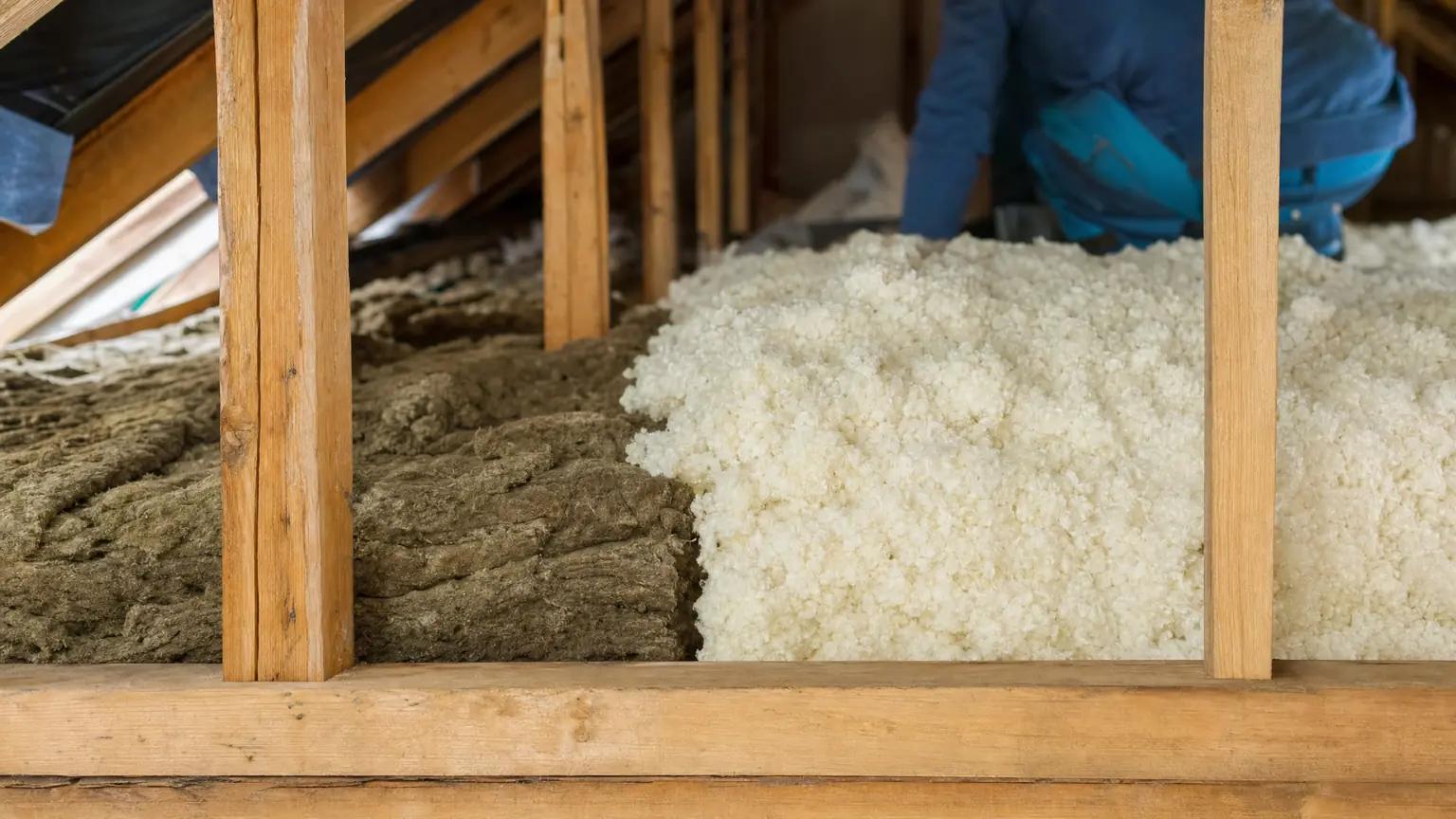
The honest answer: it does not have a shelf life
Fiberglass is glass. Left dry and undisturbed, it does not rot, decompose, or expire on a schedule, and you will find numbers between eighty and a hundred years quoted for it online.
We are not going to repeat one, because we could not find a testing body behind any of them. Those figures trace back to manufacturer marketing rather than to an independent standard, and a number we cannot show you the source for is not worth putting on a page.
The useful answer is different anyway. Insulation almost never fails from age in Florida. It fails from conditions, and conditions you can check.
The ten-minute test
Open the attic hatch and look at the depth of the material against the ceiling joists.
Standard joists are 2x6, 2x8 or 2x10, which sit about 5.5, 7.25 and 9.25 inches deep. If your insulation is level with the top of the joists or below it, you are almost certainly under code target. If you cannot see the joists at all because the material is well above them, you are in better shape.
Brevard County is Climate Zone 2A under the Florida Building Code, Energy Conservation. For that zone, ENERGY STAR recommends R38 where three to four inches already exist, and R49 in an attic starting from nothing.
Depth is not the same as R-value, because the R per inch differs by material and compaction changes it. But depth against the joist line is the fastest signal a homeowner can read without equipment.
| R-value | Installed depth |
|---|---|
| R-13 | 4.75" |
| R-19 | 7" |
| R-22 | 8" |
| R-26 | 9.25" |
| R-30 | 10.5" |
| R-38 | 13.25" |
| R-44 | 15" |
| R-49 | 16.75" |
| R-60 | 20" |
Blown fiberglass, Owens Corning PROPINK L77 PINK Fiberglas Loosefill. The higher the R-value, the greater the insulating power. Ask your seller for the fact sheet on R-values.
The four things that actually end it
A roof leak, current or repaired. Wet material stays wet in a Florida attic and does not recover its R-value.
Rodents. Contamination is not cleanable out of loose-fill.
Compaction. Insulation works by holding still air. Anything that crushes it, including storage, foot traffic and decades of settling, takes the air and the performance together.
Somebody moving it. Attics get worked in. Wiring, ductwork, a new bath fan, a solar install. Material pushed aside for access very often never goes back.
What holds up best in a Florida attic
The question people usually mean by best is which material survives a Brevard summer, and the honest answer is that all of the common ones do, provided they stay dry.
Fiberglass, whether blown-in or batt, does not absorb water, does not feed mold, and is not food for pests. It is what we install, and it is one of the material types FPL's rebate program accepts alongside spray foam.
Keeping it dry is a roof and ventilation question, not an insulation question. That is worth saying plainly, because it is the part that actually decides how long yours lasts.
Sources
- Florida Building Code, Energy Conservation, 8th Edition (2023), Chapter 3 RE, Table 301.1 Climate Zones by County
- U.S. EPA ENERGY STAR, Recommended Home Insulation R-Values (from 2021 IECC Table R402.1.3)
- Florida Power & Light Company, Residential Ceiling Insulation Program Standards (effective September 1, 2025)
Every figure on this page comes from one of the documents above. Where we could not find a primary source for a number, we left the number out rather than repeat one we could not show you.
Sources verified .
The work behind this
Blown-In Fiberglass Insulation
Fire-resistant fiberglass, blown to the depth your attic needs. The pink that lives in our logo lives in your attic.
Batt Insulation Installation
Pre-cut fiberglass for walls, floors, and accessible cavities. Soft, low-dust, GREENGUARD Gold.
Insulation Removal & Attic Vac-Outs
Storm-damaged, rodent-soiled, or 1980s blown-in past its life. We vac it out clean.
Want your actual number instead of a range?
We measure your attic, tell you the R-value you are starting from, and write the quote in front of you. Free, and you keep the reading either way.