
Questions
Everything we get asked, answered.
108 questions, each with a short answer you can act on. Where there is a guide behind one, with the code sections and the research it rests on, the answer links to it.
R-value and depth
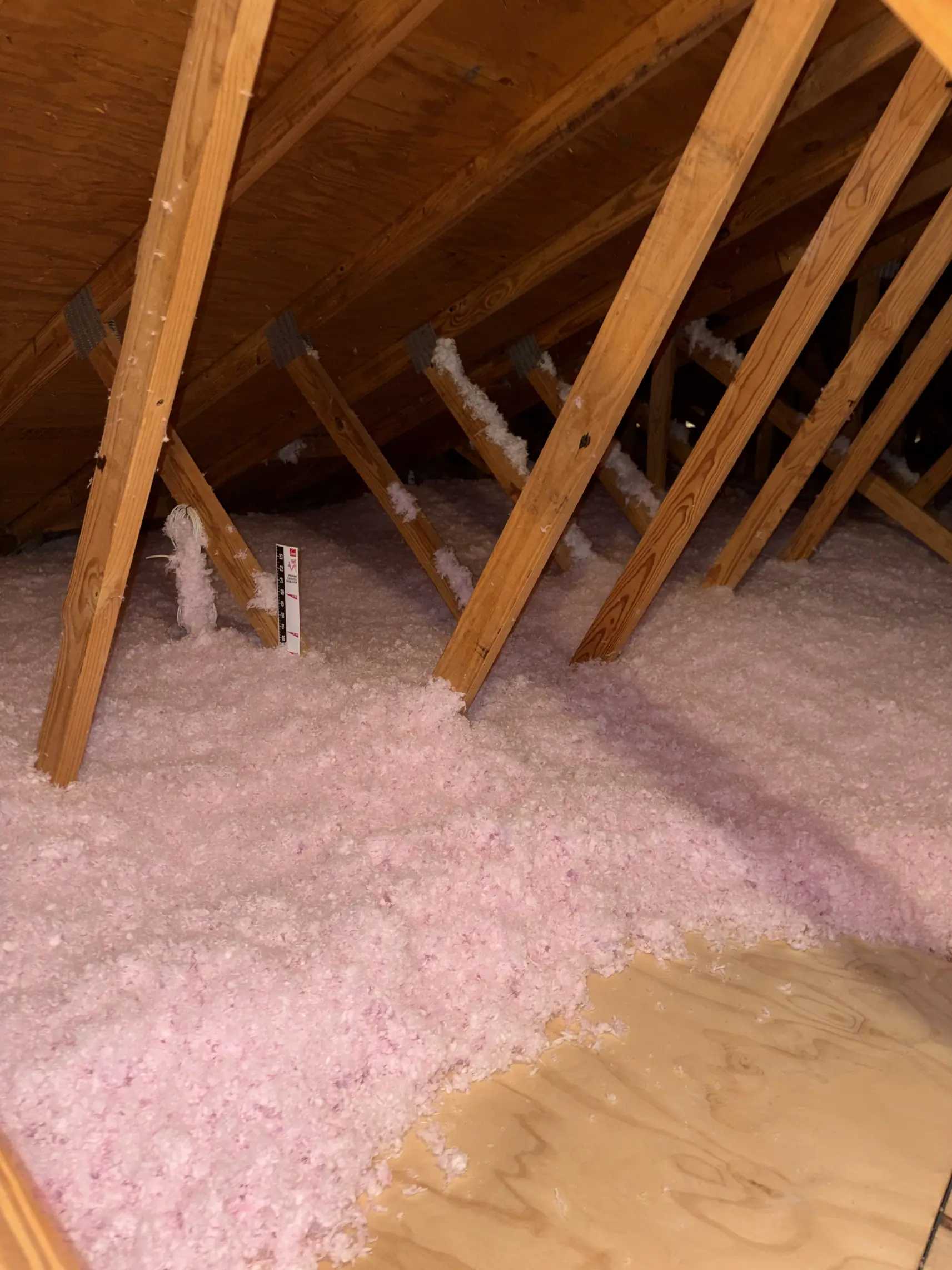
| R-value | Installed depth |
|---|---|
| R-13 | 4.75" |
| R-19 | 7" |
| R-22 | 8" |
| R-26 | 9.25" |
| R-30 | 10.5" |
| R-38 | 13.25" |
| R-44 | 15" |
| R-49 | 16.75" |
| R-60 | 20" |
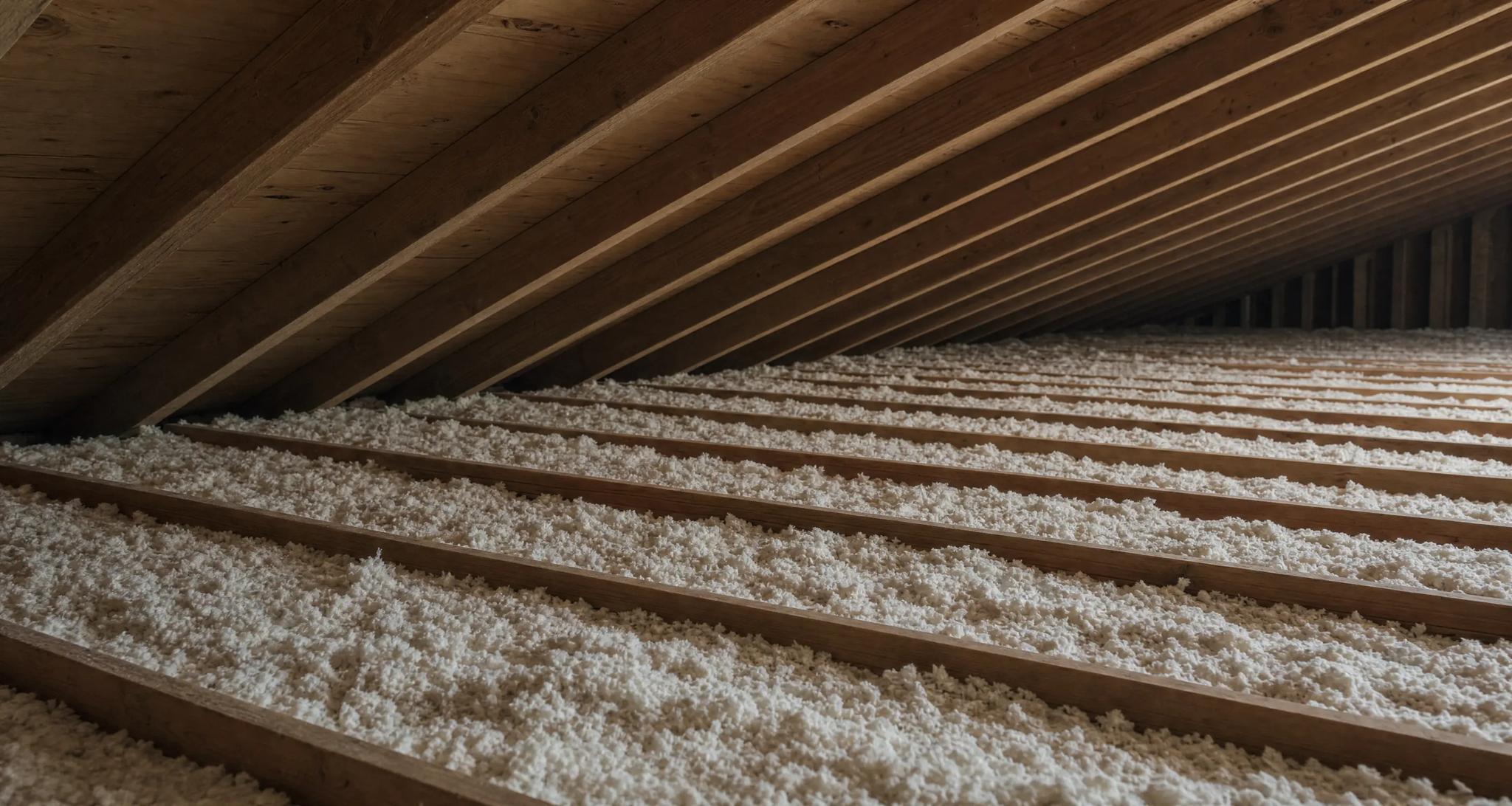
Blown fiberglass, Owens Corning PROPINK L77 PINK Fiberglas Loosefill. The higher the R-value, the greater the insulating power. Ask your seller for the fact sheet on R-values.
The Attic Monkeys
Who does the work, how long the shop has been running, and what it does and does not take on.
- Who runs The Attic Monkeys?
- Matt Bunker owns it and is on the crew. The person who answers the phone is usually the person who ends up in your rafters with a flashlight, and the number you get is the one he wrote in front of you.Read it on the about page
- When did The Attic Monkeys start?
- In 2026. Matt started it because Brevard homeowners kept getting attic quotes from people who would not climb into the attic to write one.Read it on the about page
- What does the crew specialize in?
- Three, and this is the whole list: blown-in and batt insulation, insulation removal and attic vac-outs, and dryer vent cleaning.Read it on the about page
- Is The Attic Monkeys locally owned?
- Yes. Owner-operated, based in Brevard County, working on houses in the towns we live in. There is no call center between you and the crew.Read it on the about page
- What do customers say about the work?
- In their own words, on the reviews page, straight from the Google profile rather than collected by us. The source is linked there too, so you can read it where we cannot edit it.Read the reviews in full
Attic insulation
What a job is priced on, what the state code asks for, and how to read what is already up there.
- How much does attic insulation cost?
- Four things set it: your attic's square footage, the R-value you are starting from, the R-value you need to reach, and whether the old material has to come out first. Three of those cannot be seen from the driveway, which is why we measure and write the number on site instead of publishing a rate.The full answer: what attic insulation costs in Brevard County
- Why can't a contractor quote attic insulation over the phone?
- Because three of the four things that set the price are invisible from the driveway: the R-value you are starting from, the R-value you need, and whether the existing material has to come out first. Square footage is the only one you can give over the phone.The full answer: what attic insulation costs in Brevard County
- What R-value does an attic in Brevard County need?
- Brevard is Climate Zone 2A, and ENERGY STAR recommends R49 for an attic with no insulation and R38 where three to four inches are already there. This is the biggest driver of your number: R19 to R38 is a different job from R30 to R38 in the same attic.The full answer: what attic insulation costs in Brevard County
- What reduces the cost of an attic insulation job in Florida?
- Two things, both documented rather than estimated. FPL pays a $220 rebate per ceiling insulation installation on homes that qualify. And for Climate Zone 2, ENERGY STAR puts air sealing and insulating at 7 to 14 percent off heating and cooling costs. Savings vary. Find out why in the seller's fact sheet on R-values. Higher R-values mean greater insulating power.The full answer: what attic insulation costs in Brevard County
- Why don't you publish attic insulation prices?
- A published rate per square foot would be wrong on most houses, because the starting R-value, the target and any removal all swamp floor area. We measure your attic and write the number in front of you, free, with no deposit and no revised figure later.The full answer: what attic insulation costs in Brevard County
- How long does attic insulation last?
- It has no shelf life. Fiberglass left dry and undisturbed does not rot or expire, so condition matters more than age. In Florida it ends from water, rodents, compaction, or somebody moving it aside for access, and all four are things you can check in ten minutes.The full answer: how long attic insulation lasts, and how to tell when yours is done
- Does attic insulation expire?
- No. Fiberglass is glass, and left dry and undisturbed it does not rot or decompose. You will find eighty to a hundred year figures quoted online. We will not repeat one, because we could not find a testing body behind any of them.The full answer: how long attic insulation lasts, and how to tell when yours is done
- How can I tell if my attic insulation needs replacing?
- Open the hatch and read the depth against the ceiling joists. Joists sit about 5.5, 7.25 or 9.25 inches deep, so material level with the top of them or below is almost certainly under the Zone 2 target. Depth is not R-value, but it is the fastest signal without equipment.The full answer: how long attic insulation lasts, and how to tell when yours is done
- What causes attic insulation to fail?
- A roof leak, whether it is still leaking or already repaired. Rodents, whose contamination cannot be cleaned out of loose-fill. Compaction from storage, foot traffic or decades of settling. And anyone who worked up there, moved material aside for access, and never put it back.The full answer: how long attic insulation lasts, and how to tell when yours is done
- What is the best attic insulation for Florida?
- All the common materials survive a Brevard summer provided they stay dry. Fiberglass, blown or batt, does not absorb water, feed mold or feed pests, and it is what we install. Keeping it dry is a roof and ventilation question rather than a material one.The full answer: how long attic insulation lasts, and how to tell when yours is done
- Should I air seal my attic before adding insulation?
- Yes, and the order is not a preference. Federal Building America guidance is that major leaks must be sealed before insulation goes in, because once the material is down the top plates and penetrations underneath it are inaccessible without moving what you just paid for.The full answer: why air sealing comes before insulation, not after
- What is the difference between air sealing and insulation?
- Insulation is a resistance material: it slows heat conducting through the ceiling, and depth buys more of that. Air sealing closes holes. Blown insulation is air permeable, so no depth of it closes a gap, which is why a house can sit at full code depth and still leak.The full answer: why air sealing comes before insulation, not after
- Should you air seal an attic before adding insulation?
- Before. The Department of Energy's Building America guidance states that sealing all major leaks must be a precursor to installing insulation, so the leaks are closed before they become inaccessible. Once eighteen inches of blown fiberglass is down, the penetrations under it are gone.The full answer: why air sealing comes before insulation, not after
- Where does air leak from a house into the attic?
- Top plates where interior walls meet the ceiling, plumbing vent stacks, wiring penetrations, recessed light housings, bath and kitchen fan bodies, the chase around an air handler platform, and the attic hatch itself. None of them look like a problem from below.The full answer: why air sealing comes before insulation, not after
- How much does attic air sealing save in Florida?
- ENERGY STAR publishes its savings by climate zone. For Zones 1 to 3, which is where Brevard sits, air sealing and insulating together come in at 5 to 8 percent of total house energy and 7 to 14 percent on heating and cooling. The 15 percent figure quoted everywhere is the national average. Savings vary. Find out why in the seller's fact sheet on R-values. Higher R-values mean greater insulating power.The full answer: why air sealing comes before insulation, not after
- How do I make sure air sealing is in an insulation quote?
- Ask one question: what gets sealed before the material goes down, and is it itemized. A quote that lists depth and R-value and nothing else is a quote for half the work, and it is the half that has to be undone from underneath if you ever want the other half.The full answer: why air sealing comes before insulation, not after
- How does the FPL insulation rebate work?
- Florida Power & Light pays $220 per ceiling insulation installation, credited on the contractor's invoice rather than mailed back to you. Three conditions decide whether your house qualifies, and the work has to be done by a contractor enrolled in FPL's program.The full answer: the FPL ceiling insulation rebate, and whether your house qualifies
- How much is the FPL ceiling insulation rebate?
- $220 per installation, under program standards effective September 1, 2025. There is no form to mail in afterward: FPL requires the rebate to show as an itemized credit on the contractor's invoice, so done correctly you never front the money.The full answer: the FPL ceiling insulation rebate, and whether your house qualifies
- Who qualifies for the FPL insulation rebate?
- Three conditions, all of which have to hold: an active FPL residential account, whole-house central electric air conditioning and heating, and a verified existing ceiling R-value below R-8. That last one decides most cases, and it cuts both ways.The full answer: the FPL ceiling insulation rebate, and whether your house qualifies
- Do you need a specific contractor for the FPL insulation rebate?
- Yes. FPL delivers the program through Participating Independent Contractors and requires you to select and hire one for the work. A contractor who is not enrolled cannot apply the credit, however well your house qualifies.The full answer: the FPL ceiling insulation rebate, and whether your house qualifies
- Is The Attic Monkeys an FPL Participating Independent Contractor?
- No, not currently, and we will not imply otherwise on a page about the rebate. What we can do is the part FPL requires either way: get into your attic, measure what is actually up there, and give you the reading whether or not you hire us.The full answer: the FPL ceiling insulation rebate, and whether your house qualifies
- What does attic insulation cost?
- It is driven by four things: the square footage of your attic, the R-value you are going to, whether the old material has to come out first, and how hard the space is to move around in. A low-clearance attic with ductwork in the way is a different day of work than an open one. We do not publish a rate card because the honest number depends on those four, and we would rather measure your attic than quote you a range that turns out to be wrong. The on-site quote is free and written in front of you.More about blown-in fiberglass insulation
- How much insulation should a Florida attic have?
- Florida's current ceiling minimum is R-30, and the Department of Energy's recommended range for attics in this climate runs from R-30 up to R-60. Most Brevard homes built before 2000 measure well under that today, partly because they were built to an older code and partly because loose material settles over time.More about blown-in fiberglass insulation
- Can you add new insulation on top of what is already there?
- Usually yes, and it is normally the right call. Topping up is faster and cheaper than removing first. The exception is material that is wet, moldy, smoke-damaged, or rodent-soiled. Adding clean insulation on top of contaminated insulation traps the problem instead of fixing it, so that attic needs a vac-out first.More about blown-in fiberglass insulation
- How long does a blown-in job take?
- Most single-story Brevard homes are a same-day job. Larger or cut-up attics, and anything that needs a removal first, can run into a second day. We give you the honest number at the on-site quote rather than after we have started.More about blown-in fiberglass insulation
- Will this actually lower my power bill?
- It lowers the load on your AC, which is the part we control. How much that shows up on the bill depends on your equipment, your thermostat habits, and what the summer does. We will not put a percentage on your specific house that we cannot stand behind. Savings vary. Find out why in the seller's fact sheet on R-values. Higher R-values mean greater insulating power.More about blown-in fiberglass insulation
- Does blown-in fiberglass settle?
- Not the way cellulose does. Owens Corning specifies the same depth installed and settled for the loosefill we blow, so what you measure on day one is what you keep. The number that decides your R-value is the bag count, not the depth alone, and it goes on your receipt. Fiberglass also does not absorb water or feed mold if a roof leak ever finds it.More about blown-in fiberglass insulation
- Is it safe to have in the house?
- Modern blown fiberglass is non-combustible, mold and mildew resistant, and odor-free. It sits on the attic floor above your ceiling, sealed off from living space, and nothing about a normal install puts material into the rooms below.More about blown-in fiberglass insulation
- Do you install spray foam insulation?
- No. We install blown-in and batt fiberglass, and that is all we take on. Spray foam is a different trade with different equipment and different handling rules, and we would rather send you to someone who does it every day than learn it on your attic. If you already have spray foam up there and you are asking about adding fiberglass on the attic floor, that is a conversation worth having on site. We do not touch the existing foam.More about blown-in fiberglass insulation
- Batt or blown-in, which one do I need?
- Attic floor: blown-in, nearly always. Walls, garage ceilings, knee walls, and floors over unconditioned space: batt. Plenty of Brevard homes want both, and one visit can cover both.More about batt insulation installation
- Does batt insulation help with noise between rooms?
- Yes, for airborne sound like conversation and television. It fills the cavity that would otherwise carry the sound across. It does less for impact noise such as footsteps overhead, which is a structural path rather than an air path.More about batt insulation installation
- Can batt go over existing insulation?
- In an attic, sometimes, laid perpendicular to the joists. In a wall, no. If a wall cavity already holds material, the honest answer is that it needs to come out before new batt goes in, and we will tell you that at the quote rather than after.More about batt insulation installation
- What is GREENGUARD Gold certification?
- It is a third-party certification for low chemical emissions from indoor products, tested to limits set for schools and healthcare settings. The batt we install carries it, which matters most in rooms where somebody sleeps.More about batt insulation installation
- Do I need a vapor barrier in Florida?
- Usually not on the attic side, and getting it wrong is worse than leaving it out. Florida's climate drives moisture inward for most of the year, so a barrier placed the way it is done up north can trap moisture in the assembly. We assess it per house rather than applying a rule.More about batt insulation installation
Insulation removal
When the old material has to come out, and when topping over it is the cheaper right answer.
- How much does it cost to remove attic insulation?
- Most attics do not need it, so the first question is whether it applies to yours at all. Where it does, the number follows square footage, the depth and type of material, and how hard the space is to get in and out of. It is quoted as its own line, never folded into the install.The full answer: what insulation removal costs, and when you actually need it
- Does old attic insulation always have to be removed?
- No. Material that is dry, loose and uncontaminated can be topped, the R-values add up, and you pay for one job instead of two. If a contractor says every attic needs a tear-out first, ask which condition applies to yours and ask to be shown it.The full answer: what insulation removal costs, and when you actually need it
- When does attic insulation have to be removed instead of topped up?
- Four conditions force it: water, rodents, compaction, and smoke or a prior fire. Rodents are the most common one we find in Brevard. Compaction is the one people miss, because adding depth on top of a crushed layer does not bring the R-value back.The full answer: what insulation removal costs, and when you actually need it
- Do you remove insulation that might contain asbestos?
- No. Vermiculite, common in pre-1990s attics, can contain asbestos, and disturbing suspected asbestos-containing material is licensed abatement work this business does not perform. If we see it we stop, tell you what we saw, and point you to a licensed asbestos contractor for testing.The full answer: what insulation removal costs, and when you actually need it
- What determines the cost of attic insulation removal?
- Square footage, the depth of what is up there, the material type, and access. Access is the one people underestimate: a low-clearance attic with one closet hatch is a slower job than a walk-in attic with a gable vent at identical square footage.The full answer: what insulation removal costs, and when you actually need it
- Can you still get the FPL rebate if your insulation has failed?
- Possibly, and more easily than you would expect. FPL requires a verified existing ceiling R-value below R-8, and a compacted or contaminated attic is often already under that line. The program's other conditions, including the contractor requirement, still apply.The full answer: what insulation removal costs, and when you actually need it
- How do I know if my insulation needs removing instead of topping up?
- Three signals: you can smell the attic from inside the house, you have evidence of rodents, or the attic took water from a roof leak or storm. Any of those and removal is the honest answer. Thin but clean material only needs a top-up.More about insulation removal & attic vac-outs
- What if my attic has asbestos or vermiculite?
- We stop and leave it alone. Vermiculite insulation installed before the 1990s can contain asbestos, and removing or disturbing suspected asbestos-containing material is outside what this business does. If we see it, or anything that looks like it, we tell you what we found and refer you to a licensed asbestos contractor for testing before any work continues.More about insulation removal & attic vac-outs
- There are rodents in my attic. Does the insulation have to come out?
- If they have been living in it, yes. Droppings and nesting material work down into the fiberglass and cannot be spot-cleaned out of it, and the odor keeps drawing them back to the same spot. Get the pest side closed off first, by someone who does that work, then the contaminated material comes out and clean insulation goes back. Doing it in the other order means doing it twice.More about insulation removal & attic vac-outs
- How messy is a vac-out?
- Less than people expect. The material goes through a hose into a sealed bag outside, and the route from the attic hatch to the door gets covered before we start. The attic gets loud for a few hours. The house stays livable.More about insulation removal & attic vac-outs
- Do I have to leave the house?
- No. Most customers work through it. We will tell you if anything about your specific attic changes that answer before the day.More about insulation removal & attic vac-outs
- How long does an attic vac-out take?
- Most Brevard single-story homes are a same-day job, and many are a half day. Cut-up attics, low clearance, and heavy contamination add time. You get the real number at the on-site quote.More about insulation removal & attic vac-outs
- Can you put the new insulation in the same day?
- Often yes, and it is the efficient way to do it: one setup, one crew, one disruption. Air sealing happens in between while the deck is still exposed, which is the part that only works in that order.More about insulation removal & attic vac-outs
Dryer vents
Why a load needs two cycles, how often a vent needs clearing, and what Florida code requires of the run.
- Why is my dryer not drying clothes in one cycle?
- Almost always because the vent cannot move air, not because the dryer is failing. A full load holds well over a gallon of water and every drop leaves through the vent. When it cannot get out, the machine keeps heating and the moisture comes back around.The full answer: why your dryer takes two cycles, and what it is telling you
- Why does a dryer need two cycles to dry one load?
- Because drying is moisture removal, not heat. The machine heats air, pushes it through the drum, then has to move that hot wet air out of the house. A blocked run keeps the heat and the water both inside, so the symptom shows up as time rather than lost temperature.The full answer: why your dryer takes two cycles, and what it is telling you
- What are the signs of a clogged dryer vent?
- Loads needing a second cycle. Clothes coming out hotter than they should. A laundry room that turns warm and damp. Lint behind the machine or around the door seal. And an outside flap that barely moves while the dryer runs, which is the whole diagnosis in one look.The full answer: why your dryer takes two cycles, and what it is telling you
- How dangerous is a clogged dryer vent?
- The NFPA counted an average of 13,820 home structure fires a year involving dryers across 2014 to 2018, and attributes a third of them to failure to clean. Most blocked vents produce a long cycle and a high power bill and nothing worse, but the failure mode is real and removable.The full answer: why your dryer takes two cycles, and what it is telling you
- How do I know if the problem is the dryer vent or the dryer?
- Pull the flexible duct off the back and run the machine on air-dry for a minute. Strong airflow with nothing attached means the dryer is fine and the run is blocked. Weak airflow with nothing attached is an appliance repair call rather than ours.The full answer: why your dryer takes two cycles, and what it is telling you
- What does a dryer vent cleaning visit include?
- The full run from the machine to the outside hood, not the first few feet of it, then a check at the termination with the dryer running so you can watch the air move. If the run is out of code on length, material or fasteners, we tell you rather than clean it and leave.The full answer: why your dryer takes two cycles, and what it is telling you
- How often should a dryer vent be cleaned?
- Once a year is a fair default for two or three people on a short, well-built run, and it is wrong in both directions for plenty of Brevard houses. Loads per week, the length and shape of the run, and what you dry move the real interval more than the calendar does.The full answer: how often a dryer vent needs cleaning, and what sets the price
- What makes a dryer vent need cleaning more often?
- Loads per week, which scales almost directly, because lint is produced per load rather than per month. The length and number of bends in the run. What you dry, since towels, bedding and fleece shed far more than shirts. And whether the run was built to code at all.The full answer: how often a dryer vent needs cleaning, and what sets the price
- Is there a season when dryer vents need more attention in Florida?
- Not really. The national winter peak is a heating-season pattern and Brevard barely has one. What does carry here is the other blockage the same report names: a bird or animal nest behind a broken termination flap. Check the outside hood in spring rather than booking by the calendar.The full answer: how often a dryer vent needs cleaning, and what sets the price
- What does dryer vent cleaning cost?
- It follows the length of the run, how it is routed, how bad the blockage is, and the condition of the termination. A ground-floor wall exit is a different job from an attic run crossing to a second-story roof cap. The number gets written on site, free.The full answer: how often a dryer vent needs cleaning, and what sets the price
- How long does dryer vent cleaning take?
- Most straightforward runs take under an hour. A long attic run or a blocked termination takes longer, and we tell you which one you have before we start. Stay for the last five minutes: we run the dryer so you can see the air moving at the outside hood.The full answer: how often a dryer vent needs cleaning, and what sets the price
- What are the code requirements for a dryer vent?
- Florida Building Code Section M1502 sets the run at 35 feet maximum before your bends are charged against it, the duct at 4 inches of smooth 28 gauge metal, and the joints at no screws. It has to terminate outside with a backdraft damper. Your building official is the authority on your house.The full answer: the dryer vent rules your house has to meet
- Why do dryer vent code requirements matter to a homeowner?
- Because cleaning cannot fix a vent that was built wrong. Too long, wrong material, or joined with screws, and it refills with lint on a schedule no service interval keeps up with. The numbers also tell you whether the person quoting you has looked at the real problem.The full answer: the dryer vent rules your house has to meet
- How long is a dryer vent allowed to be in Florida?
- Thirty-five feet, measured from behind the dryer out to the terminal, and every fitting spends part of that budget. A tight mitered 90 degree elbow costs 5 feet of it, so four of them use 20 feet before a single straight foot counts. Wide-radius smooth elbows cost far less.The full answer: the dryer vent rules your house has to meet
- What material and size does a dryer vent have to be?
- Four inches nominal, smooth inside, metal of at least 0.0157 inch, which is 28 gauge. Joints must not use screws, because a screw point inside a duct is a hook that lint builds out from. The flexible piece behind the machine is a transition duct: one listed length, 8 feet maximum, never concealed in construction.The full answer: the dryer vent rules your house has to meet
- Where is a dryer vent allowed to terminate?
- Outside the building, and where the manufacturer does not specify otherwise, at least 3 feet from any opening into the house. It needs a backdraft damper and at least 12.5 square inches of open area. That is why fine mesh over a dryer termination is a problem rather than a precaution.The full answer: the dryer vent rules your house has to meet
- What happens if my dryer vent does not meet code?
- We tell you which rule it misses and what fixing it would take, in writing with the quote. A crushed or foil transition hose is part of a normal cleaning. Rerouting a run, replacing duct, or moving a termination is work we do not sell, and we say so rather than clean around it.The full answer: the dryer vent rules your house has to meet
- What are the signs my dryer vent is clogged?
- Clothes needing a second cycle, a laundry room that gets warm during a load, a hot dryer cabinet, no flap movement at the outside vent while the machine runs, and lint visible around the exterior hood.More about dryer vent cleaning
- Can I just clean it myself with a kit?
- A consumer kit handles a short straight side-wall run reasonably well. It does not handle a through-roof run, because the lint packs at the elbow and the cap and a hand brush cannot reach either from inside. That is the case where the run has to be worked from both ends.More about dryer vent cleaning
- How long does it take?
- Most jobs run about an hour. A long through-roof run with a difficult cap can take longer, and we will say so when we see it rather than after.More about dryer vent cleaning
- Do you clean the dryer itself?
- Yes. Lint collects inside the cabinet as well as in the duct, and cleaning one without the other leaves half the fuel in place.More about dryer vent cleaning
Attic heat, ventilation and humidity
How hot it actually gets up there, how much ventilation the code asks for, and what makes a house feel damp.
- How hot does an attic get in summer?
- Florida research measured peak attic air 40 degrees above the outdoor temperature, which puts a 93 degree afternoon around 133 degrees above your ceiling. Insulation depth at the ceiling plane is the large lever on that. A fan is a small one, and the order matters.The full answer: how hot a Brevard attic gets, and what actually brings it down
- How hot does an attic get in Florida?
- The Florida Solar Energy Center instrumented six Fort Myers homes with R-19 ceilings and measured peak attic air 40 degrees above ambient. On a 93 degree Brevard afternoon that is about 133 degrees sitting on your ceiling, with the roof deck hotter still.The full answer: how hot a Brevard attic gets, and what actually brings it down
- How does attic heat affect your electric bill?
- Heat moves from hot to cold, so 133 degree air presses down on a 75 degree ceiling all afternoon with only the insulation depth between them. If your air handler and ducts are up there, and in Brevard they usually are, every foot of duct is carrying cold air through that.The full answer: how hot a Brevard attic gets, and what actually brings it down
- What is the most effective way to reduce attic heat?
- Insulation at the ceiling plane, to the Zone 2 target, and sealing the holes through the ceiling before it goes down. The largest single lever in the Florida study was the roof itself: reflective roofing held peak attic temperature to no more than ambient, which is a decision for replacement time.The full answer: how hot a Brevard attic gets, and what actually brings it down
- Are attic fans worth it?
- A real lever, but a small one, and it belongs after the ceiling is fixed. The Florida Solar Energy Center found powered ventilators draw 250 to 300 watts and do not typically save net energy unless the attic is uninsulated. Solar fans measured about 6 percent space cooling reduction in a well insulated home.The full answer: how hot a Brevard attic gets, and what actually brings it down
- How do I find out where my attic stands?
- We read the depth that is actually up there and tell you how it compares with the Zone 2 target. That is free, and you get the number whether or not you hire us. If your attic turns out to be at depth and well sealed, we say so and leave.The full answer: how hot a Brevard attic gets, and what actually brings it down
- How much attic ventilation do I need?
- One square foot of net free vent area for every 150 square feet of attic floor, halved to one per 300 if 40 to 50 percent of it sits high near the ridge and the balance sits low. Net free area is the manufacturer's published figure, not the size of the opening.The full answer: how much attic ventilation Florida code requires
- How much attic ventilation does Florida code require?
- Section R806 sets the minimum net free ventilating area at 1/150 of the vented space. The 1/300 exception is earned by placement: 40 to 50 percent of the required area high, no more than 3 feet below the ridge, and the balance in the bottom third. Its vapor retarder condition applies to Zones 6 through 8, not here.The full answer: how much attic ventilation Florida code requires
- How do you calculate attic ventilation net free area?
- One division and a placement rule. An 1,800 square foot attic needs 12 square feet at 1/150, or 6 square feet at 1/300 with correct placement, of which roughly 346 to 432 square inches goes high. Use the manufacturer's published net free area, not a tape measure across the vent.The full answer: how much attic ventilation Florida code requires
- Do you need both soffit vents and ridge vents?
- Yes. The code asks for cross ventilation, and the placement rule describes a system: low air in at the eave, high air out at the ridge. Exhaust without intake pulls, and if the soffits are blocked the nearest available opening is your ceiling.The full answer: how much attic ventilation Florida code requires
- Can attic insulation block soffit vents?
- It is the most common ventilation problem we find in Brevard attics, and it is an insulation defect rather than a roofing one. R806.3 requires at least a 1-inch space between the insulation and the roof sheathing at the vent. The fix is a baffle at every rafter bay, installed before the material goes in.The full answer: how much attic ventilation Florida code requires
- Can an attic have too much ventilation in Florida?
- More is not automatically better in this climate. The state's own review notes passively ventilated attics drawing large amounts of moisture-laden air in during humid evenings, which can lead to sweating ducts and air handlers. Hit the code figure, balance intake and exhaust, and treat condensation as a moisture question.The full answer: how much attic ventilation Florida code requires
- Why is my house humid with the air conditioning running?
- Because the system is removing heat without removing enough water. Two causes are attic-side and ours: air leaking through the ceiling plane, and a vented attic drawing humid evening air in. The rest, oversized equipment and return-side duct leakage, is licensed air conditioning work.The full answer: why a Florida house feels humid with the AC running
- What indoor humidity level should a house be at?
- The EPA's guidance is below 60 percent relative humidity, ideally between 30 and 50. Buy a hygrometer before diagnosing anything. At 68 percent and 74 degrees you do not have a cooling problem: you have a system removing heat and not enough water, and the temperature reading is hiding it.The full answer: why a Florida house feels humid with the AC running
- Can attic problems make a house humid?
- Two ways, and both are ours. Air leaking through unsealed ceiling penetrations trades your conditioned air for attic air continuously, which is the most common attic-side cause we find. And a vented attic breathes in humid evening air, which is what sweating ducts and a ceiling stain with no leak above it usually are.The full answer: why a Florida house feels humid with the AC running
- What causes high humidity in a house with the AC running?
- The rest of the honest answer is air conditioning work: an oversized system that short cycles before it can pull water out, return-side duct leakage importing attic air, or a house that genuinely needs dedicated dehumidification. All three belong to a licensed air conditioning contractor.The full answer: why a Florida house feels humid with the AC running
- How do I reduce humidity in my house?
- Start with several days of readings, from more than one room. Then look for the cheap sources: a bath fan venting into the attic, a dryer venting short, an unsealed attic hatch. Then work out whether your cause is attic-side or equipment-side, because the two lists have different owners.The full answer: why a Florida house feels humid with the AC running
- Does humidity damage attic insulation?
- Damp insulation is dead insulation, and moisture is the first of the four conditions that force a tear-out. A house that runs at 65 percent for three summers is a house whose attic gets vacuumed out eventually, which is why we care about a number we do not sell against.The full answer: why a Florida house feels humid with the AC running
Garages
What insulating one changes, what it does not, and the surface most people skip.
- Is it worth insulating a garage in Florida?
- It depends on what the garage borders. The boundary between the garage and the rooms you cool is real envelope and worth doing. The outer shell buys a usable room and protection for what is stored there. No code R-value governs a garage, because it sits outside the thermal envelope.The full answer: insulating a garage in Florida, and what it does and does not do
- What R-value does a garage need in Florida?
- None, in most houses. The code's R-value targets apply to the thermal envelope around conditioned space, and a typical attached garage sits outside it: not heated, not cooled, not part of the envelope. Anyone quoting you a required garage R-value is quoting something else.The full answer: insulating a garage in Florida, and what it does and does not do
- Should you insulate the wall between the garage and the house?
- If you do one thing in a garage, do this one, and seal it as well as insulate it. That common wall, and the garage ceiling where there are rooms above, is real envelope. It is also the surface most often built thin and then never revisited.The full answer: insulating a garage in Florida, and what it does and does not do
- Should you insulate a garage ceiling?
- Where there is attic above it, yes, because that ceiling takes the same load a house ceiling does. It is also where the material gets decided: batt in an accessible framed ceiling or on an open common wall, blown-in over a finished ceiling with attic above it.The full answer: insulating a garage in Florida, and what it does and does not do
- Can you air condition an insulated garage?
- Not work we do. We insulate the shell, and extending your air conditioning into the garage belongs to a licensed air conditioning contractor. It comes up more often than you would think, because a well insulated garage makes conditioning it look cheap.The full answer: insulating a garage in Florida, and what it does and does not do
- Is insulating a garage in Florida actually worth it?
- It depends entirely on what the garage borders. If it shares a wall and a ceiling with rooms you cool, yes, because those surfaces are moving heat into conditioned space all afternoon. If it is a detached garage you use for storage, the honest answer is that your money does more in the attic over the house.More about garage insulation
- Will insulating make my garage cool?
- No, and we will not sell it that way. Insulation slows heat movement, it does not remove heat. An insulated garage with no conditioning gets hot more slowly and stays warm longer. What changes noticeably is the rooms next to it, which is usually the actual complaint.More about garage insulation
- What about the garage door itself?
- It is often the largest uninsulated surface in the room and it is a door, not a wall assembly, so it is a different job with different products. We will tell you where it sits on your list, and it is rarely first.More about garage insulation
- The room over my garage is always hot. Is this the fix?
- It is usually most of it. That floor is the garage's ceiling, and in a lot of homes it went in empty or the batts have since sagged out of contact with the subfloor. We check contact and fit up there before quoting, because material that is present and not touching is not working.More about garage insulation
Working with us
Quotes, scheduling, service area and the guarantee.
- Do you charge for quotes?
- No. The on-site quote is free: no $50 trip fee, no diagnostic charge, no callback dance. We spend about 45 minutes in your attic, take photos and measurements, and hand you a written number before we leave.
- What areas do you serve?
- All of Brevard County: Mims, Titusville, Cocoa, Viera, Suntree, Melbourne, West Melbourne, Palm Bay, Satellite Beach, Indialantic, Indian Harbour Beach, and Melbourne Beach. If you're on the edge of the county, call (321) 539-3282 to check.
- How fast can you come out?
- It depends on the week and the route. Call or text, or send a request, and we will offer you the first open slot in your area. If a storm damaged your dryer vent or attic, tell us and we will try to fit you in sooner.
- What does the cooler. cleaner. or we come back free guarantee actually cover?
- If we install insulation and your power bill doesn't move, or we clean a dryer vent and the airflow doesn't improve, we come back at no charge. No paperwork dance, no carve-outs, no expiration. Our name is on the work; that's the version of the guarantee that matters.
- What happens next?
- The owner replies to requests himself. No phone tree.
- How long does the on-site quote take?
- About 45 minutes. We get up into the attic, take photos and measurements, and hand you a written number before we leave. You are not waiting on an email that arrives three days later.
- Does the visit cost anything?
- No. There is no trip fee and no diagnostic charge, and that holds whether you hire us or not. If the honest answer is that your attic is fine, we tell you that and leave.
- Can I pick a time myself instead of filling this out?
- Call or text (321) 539-3282 and we will find a time that works. Or send a request and the owner will get back to you himself.
Ready for the on-site quote?
45 minutes in your attic, photos and measurements, and a written number before we leave. Same crew you just read about.