
How often a dryer vent needs cleaning, and what sets the price
Once a year is a starting point, not an answer. Four things move your real interval, and three different ones move the price.
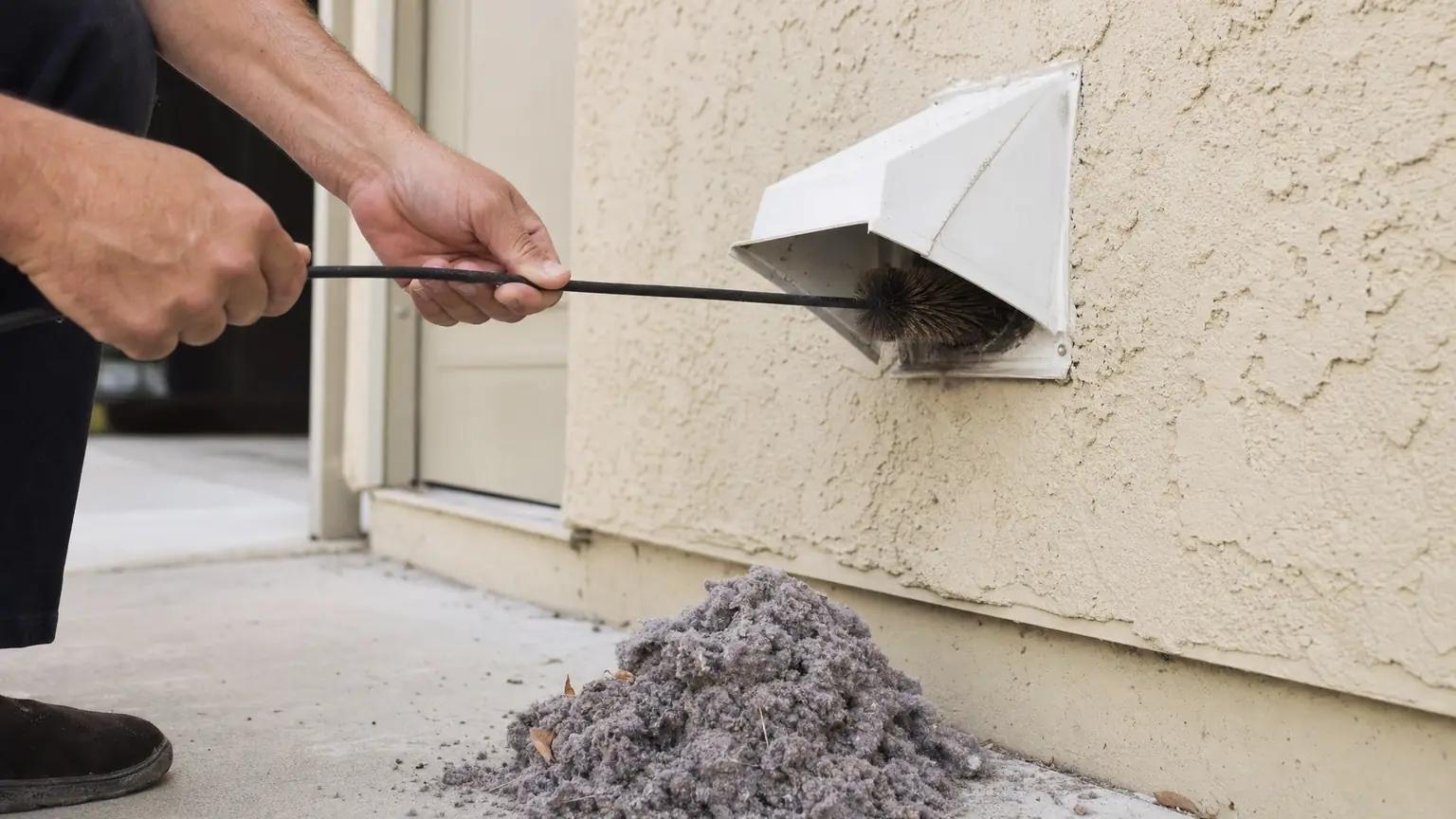
The honest baseline
Once a year is the standard advice and it is a reasonable default for a household of two or three with a short, well-built vent run.
It is also the wrong number for a lot of houses in both directions. A retired couple doing two loads a week through a straight eight-foot run does not need annual service. A family of five drying towels and sports gear through a thirty-foot attic run does not get twelve months out of a cleaning. Treating the calendar as the answer is how people end up surprised.
The useful question is not how often. It is what makes your house different from the default.
The four things that shorten your interval
Loads per week. This is the biggest one and it scales almost directly. Lint is produced per load, not per month.
The length and shape of the run. Every foot and every bend is somewhere for lint to settle. A vent that exits through the wall right behind the dryer stays clean far longer than one that climbs into the attic and crosses the house.
What you dry. Towels, bedding, fleece and pet bedding shed considerably more than shirts.
Whether the run is up to code. Flexible foil duct inside a wall, screws at the joints, or a run past the length limit all catch lint in a way a correct vent does not. Those are covered in the dryer vent rules guide.
The seasonal note for Florida
The U.S. Fire Administration found clothes dryer fire incidence in residential buildings was higher in the fall and winter months, peaking in January at 11 percent.
That is a national pattern driven by heating season, and Brevard does not have much of one. The part that does carry here is the other blockage source the same report names: nests of small birds or other animals in the exhaust vent. A termination hood with a broken or missing flap is an open invitation on this coast, and it blocks a vent far faster than lint does.
So the seasonal advice we actually give is to look at the outside hood in spring, not to book on a calendar.
What sets the price, and why we will not print one
The length of the run, how it is routed, how bad the blockage is, and what condition the termination is in.
A ground-floor wall exit is a different job from an attic run crossing to a second-story roof cap, and it takes longer to clean and inspect. If the duct itself needs replacing rather than cleaning, a new hood or a section of rigid pipe, that is outside what this visit covers, and we will say so rather than fold it into the price.
We could publish a flat rate. It would be right for the easy half of Brevard houses and wrong for the other half, and the half it is wrong for is the half that needs the work. We quote on site, in writing, for free.
How long it takes
A straightforward run is under an hour. A long attic run or a blocked termination runs longer, and we tell you which one you have before we start rather than after. If the vent needs rebuilding rather than cleaning, that is a different job, and we say so instead of working around it.
You do not need to be home for the whole visit, but stay for the last five minutes. We run the dryer and show you the air moving at the outside hood. That is the only proof that matters, and it takes a moment.
Sources
- U.S. Fire Administration, Clothes Dryer Fires in Residential Buildings (2008-2010), Topical Fire Report Series Volume 13 Issue 7, August 2012
- National Fire Protection Association, Home Dryer Fires (Marty Ahrens, June 2020, NFPA Index No. 3029)
- Florida Building Code, Residential, 8th Edition (2023), Chapter 15, Section M1502 Clothes Dryer Exhaust
Every figure on this page comes from one of the documents above. Where we could not find a primary source for a number, we left the number out rather than repeat one we could not show you.
Sources verified .
Want your actual number instead of a range?
We measure your attic, tell you the R-value you are starting from, and write the quote in front of you. Free, and you keep the reading either way.