
Why your dryer takes two cycles, and what it is telling you
Two cycles means the machine cannot push its moisture out. Here are the five signs that separate a blocked vent from a failing dryer.
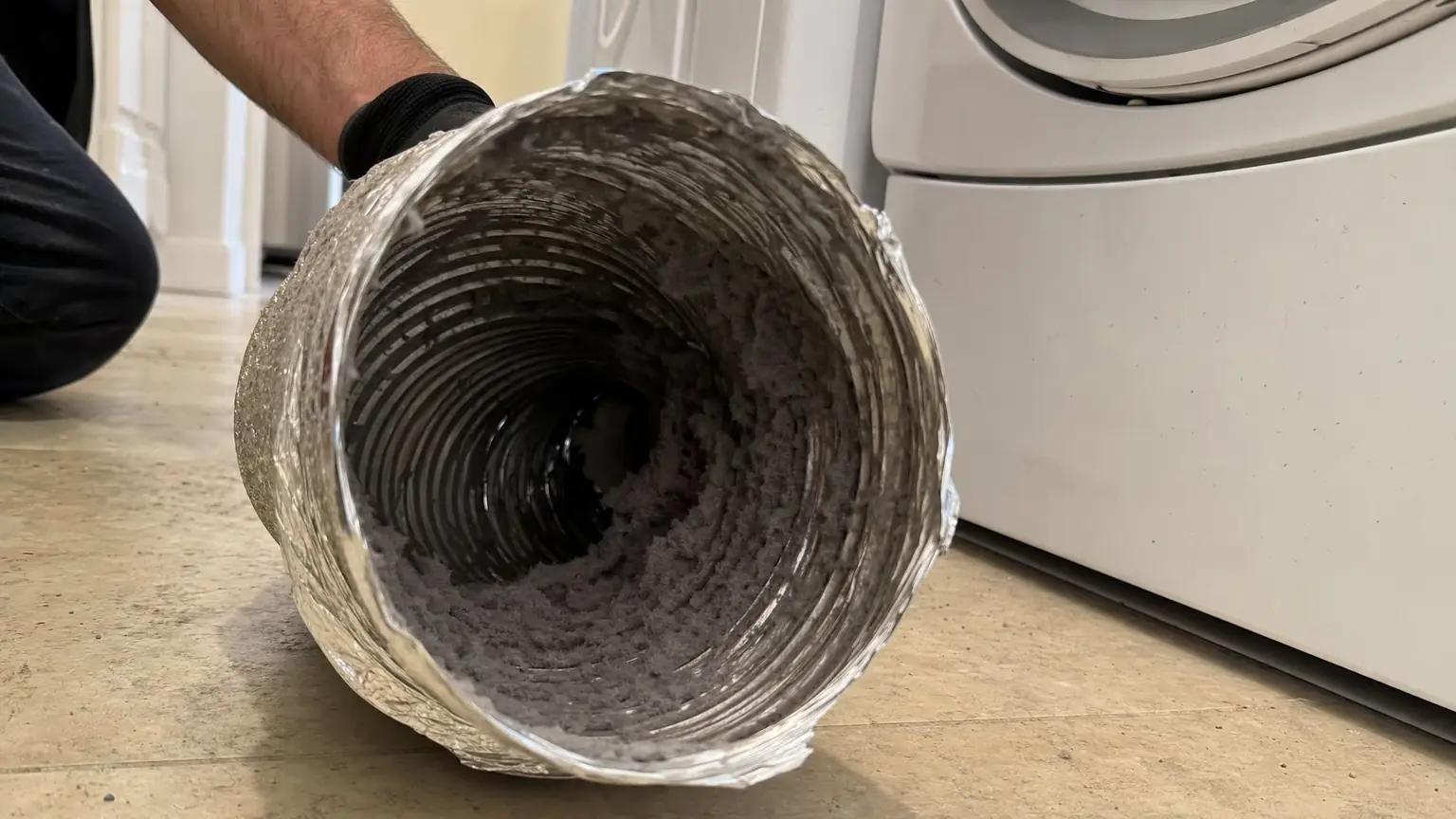
What the second cycle actually is
A dryer does not dry clothes with heat alone. It heats air, pushes it through the drum, and then has to move that hot wet air out of your house. A full load can hold well over a gallon of water, and every drop of it leaves through the vent.
When the vent cannot move air, the machine still heats. It just has nowhere to put the moisture, so the moisture comes back around. That is the second cycle. The dryer is not weak, it is choking.
This is why the symptom shows up as time rather than temperature. People assume a dryer that runs long has lost its heat. Usually it has the opposite problem.
The five signs, in the order they usually appear
Loads need a second cycle. The first and clearest one. A normal load that used to finish in one run now does not.
The clothes come out hot. Hotter than they should be, and hot on the outside of the pile. Heat that cannot leave stays in the drum.
The laundry room gets warm and damp. Air that is not going outside is going somewhere, and that somewhere is the room.
Lint appears where lint should not be. Around the door seal, behind the machine, on the floor near the wall. Lint escaping backward means it cannot go forward.
The outside flap barely moves. Go outside while the dryer runs and look at the termination hood. It should be visibly pushing air. A flap that sits nearly still is the whole diagnosis in one look.
Why this is worth acting on rather than living with
The National Fire Protection Association counted an average of 13,820 home structure fires a year involving dryers across 2014 to 2018, causing an annual average of seven civilian deaths, 344 civilian injuries and $233 million in direct property damage.
The leading cause is not a manufacturing defect. NFPA attributes one third of those fires, 32 percent, to failure to clean, and 27 percent of dryer fires started when dust, fiber or lint ignited. The U.S. Fire Administration reached the same conclusion on a separate data set, putting failure to clean at 34 percent of residential clothes dryer fires.
We are not going to tell you your house is about to burn down. Most blocked vents produce a long dry cycle and a high power bill and nothing worse. But the failure mode that does exist is the one you can remove with an afternoon of work, and the symptom that predicts it is the one you already noticed.
When it is the vent, and when it is the dryer
There is a fast way to separate the two. Pull the flexible duct off the back of the dryer and run the machine on air-dry for a minute with the duct disconnected.
If the airflow out of the machine is strong, the dryer is fine and the run is blocked. If it is weak with nothing attached, the problem is inside the appliance, and that is an appliance repair call rather than ours.
The other common finding is that nothing is blocked and the run is simply too long or has too many bends to work. Florida sets a limit on both, and a vent built past it will never dry well no matter how often it is cleaned. That case is covered in the dryer vent rules guide.
What we do about it
We clean the full run from the machine to the outside hood, not the first few feet of it. Then we check the termination with the dryer running, so you can see the air move.
If the run is out of code on length, material or fasteners, we tell you that instead of cleaning it and leaving. A vent that is built wrong will be blocked again within the year, and taking money to postpone that is not a service.
Sources
- National Fire Protection Association, Home Dryer Fires (Marty Ahrens, June 2020, NFPA Index No. 3029)
- U.S. Fire Administration, Clothes Dryer Fires in Residential Buildings (2008-2010), Topical Fire Report Series Volume 13 Issue 7, August 2012
- Florida Building Code, Residential, 8th Edition (2023), Chapter 15, Section M1502 Clothes Dryer Exhaust
Every figure on this page comes from one of the documents above. Where we could not find a primary source for a number, we left the number out rather than repeat one we could not show you.
Sources verified .
Want your actual number instead of a range?
We measure your attic, tell you the R-value you are starting from, and write the quote in front of you. Free, and you keep the reading either way.