
How hot a Brevard attic gets, and what actually brings it down
State research measured peak attic air 40 degrees above outdoors. Here is what actually lowers it, in the order the evidence puts them.
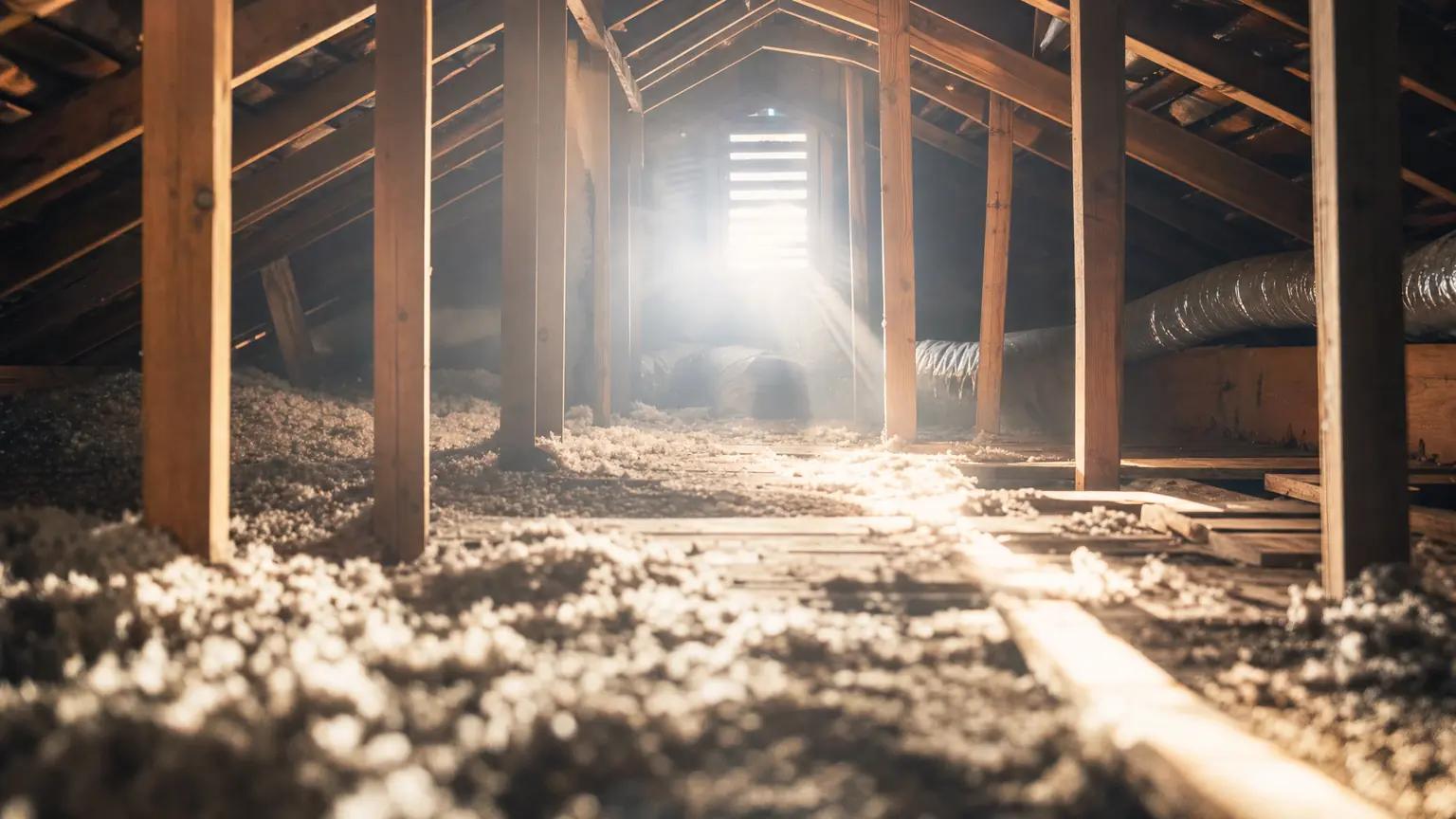
The number, measured in Florida
The Florida Solar Energy Center instrumented six side-by-side homes in Fort Myers. Identical floor plans, identical orientation, R-19 ceiling insulation. In the control home, the maximum attic temperature during the peak summer hour is 40°F greater than ambient air temperature.
On a 93 degree Brevard afternoon that puts the air above your ceiling around 133. The roof deck runs hotter still.
This is not a comfort problem in a space nobody uses. It is a load problem, because the two things that matter most in your house are on the wrong side of that number: your ceiling, and in most Brevard homes, your ductwork.
Why the attic decides part of your power bill
Heat moves from hot to cold. A 133 degree attic sitting on a 75 degree ceiling pushes down all afternoon, and the only thing between them is whatever depth of insulation is up there.
If your air handler and ducts are in that attic, and in Brevard they usually are, the problem compounds. Every foot of duct is carrying cold air through 130 degree air, and any leak in the return side pulls attic air straight into the system.
That is the reason attic work reads as an energy measure rather than a comfort one. You are not cooling the attic. You are reducing what it does to the two things running through it.
What the research puts first
Insulation at the ceiling plane, at the depth the code targets. Brevard County is Climate Zone 2A under the Florida Building Code, Energy Conservation, and for that zone ENERGY STAR recommends R38 where three to four inches already exist and R49 in an attic starting from nothing.
Sealing the holes through the ceiling before that insulation goes down, which is its own subject and is covered in the air sealing guide.
The roof itself. The same Fort Myers study found that highly reflective roofing systems held peak attic temperature to no greater than ambient. That is a roofing decision made at replacement time rather than something to bring forward, but it is the largest single lever in the study and worth knowing when the roof does come up.
| R-value | Installed depth |
|---|---|
| R-13 | 4.75" |
| R-19 | 7" |
| R-22 | 8" |
| R-26 | 9.25" |
| R-30 | 10.5" |
| R-38 | 13.25" |
| R-44 | 15" |
| R-49 | 16.75" |
| R-60 | 20" |
Blown fiberglass, Owens Corning PROPINK L77 PINK Fiberglas Loosefill. The higher the R-value, the greater the insulating power. Ask your seller for the fact sheet on R-values.
Where a fan actually lands
A fan is a real but small lever, and it belongs after the ceiling is fixed rather than instead of it. This is the part people expect us to answer differently, so here is the state's own reading of the literature rather than ours.
On conventional powered ventilators, the Florida Solar Energy Center is blunt. They draw 250 to 300 watts. Measured reduction to the maximum cooling load was only 6 percent at R-11 ceiling insulation. Its conclusion: the powered ventilation does not typically result in a net energy savings unless the attic is uninsulated. The same review notes powered attic ventilation can draw conditioned air from the building interior through leakage at the ceiling.
Solar fans avoid the first half of that problem, because the electricity is not coming off your meter. The measured result is still modest. A Central Florida case study on two photovoltaic attic ventilator fans found they reduced peak summer attic air temperature by over 20°F. But the impact over the cooling season is fairly modest with well insulated attics. Measured space cooling reduction was roughly 6 percent.
Read in order: fix the ceiling first. A fan on top of a properly insulated, properly sealed attic is a small additional gain. A fan instead of that work is buying the small lever and skipping the large one.
What we will tell you at your house
We measure the depth that is actually up there and tell you where it sits against the Zone 2 target, free, whether or not you hire us.
If the answer is that your attic is already at depth and well sealed, we will say so and leave. There is no version of this where we find nothing and quote you anyway.
Sources
- Florida Solar Energy Center, Comparative Evaluation of the Impact of Roofing Systems on Residential Cooling Energy Demand (Parker, Sonne, Sherwin and Moyer, November 2000, FSEC-CR-1220-00)
- Florida Solar Energy Center, Literature Review of the Impact and Need for Attic Ventilation in Florida Homes (Danny Parker, May 2005, FSEC-CR-1496-05)
- Florida Building Code, Energy Conservation, 8th Edition (2023), Chapter 3 RE, Table 301.1 Climate Zones by County
- U.S. EPA ENERGY STAR, Recommended Home Insulation R-Values (from 2021 IECC Table R402.1.3)
Every figure on this page comes from one of the documents above. Where we could not find a primary source for a number, we left the number out rather than repeat one we could not show you.
Sources verified .
The work behind this
Blown-In Fiberglass Insulation
Fire-resistant fiberglass, blown to the depth your attic needs. The pink that lives in our logo lives in your attic.
Batt Insulation Installation
Pre-cut fiberglass for walls, floors, and accessible cavities. Soft, low-dust, GREENGUARD Gold.
Insulation Removal & Attic Vac-Outs
Storm-damaged, rodent-soiled, or 1980s blown-in past its life. We vac it out clean.
Want your actual number instead of a range?
We measure your attic, tell you the R-value you are starting from, and write the quote in front of you. Free, and you keep the reading either way.